 WhatsApp
 Call
Call
Stranded Tin Coated Copper Wire Manufacturer in India
When an electrical conductor needs to be flexible, conductive and resistant to environmental degradation, the construction and surface finish of the wire both become important. A standard solid copper conductor can provide excellent conductivity, but it may not be the best choice where repeated bending, vibration or difficult routing is involved. This is where stranded tin coated copper wire provides a practical combination of properties. Multiple fine copper strands work together to form a flexible conductor, while a tin coating provides additional surface protection. Ganpati Wires identifies stranded/braided copper, tin and silver wires within its product portfolio and also lists stranded high-flexible copper/tin/silver wire solutions. For companies searching for a reliable Stranded Tin Coated Copper Wire Manufacturer in India, Ganpati Wire can be considered for applications where electrical performance, flexibility, surface protection and manufacturing consistency are important.
What Is Stranded Tin Coated Copper Wire?
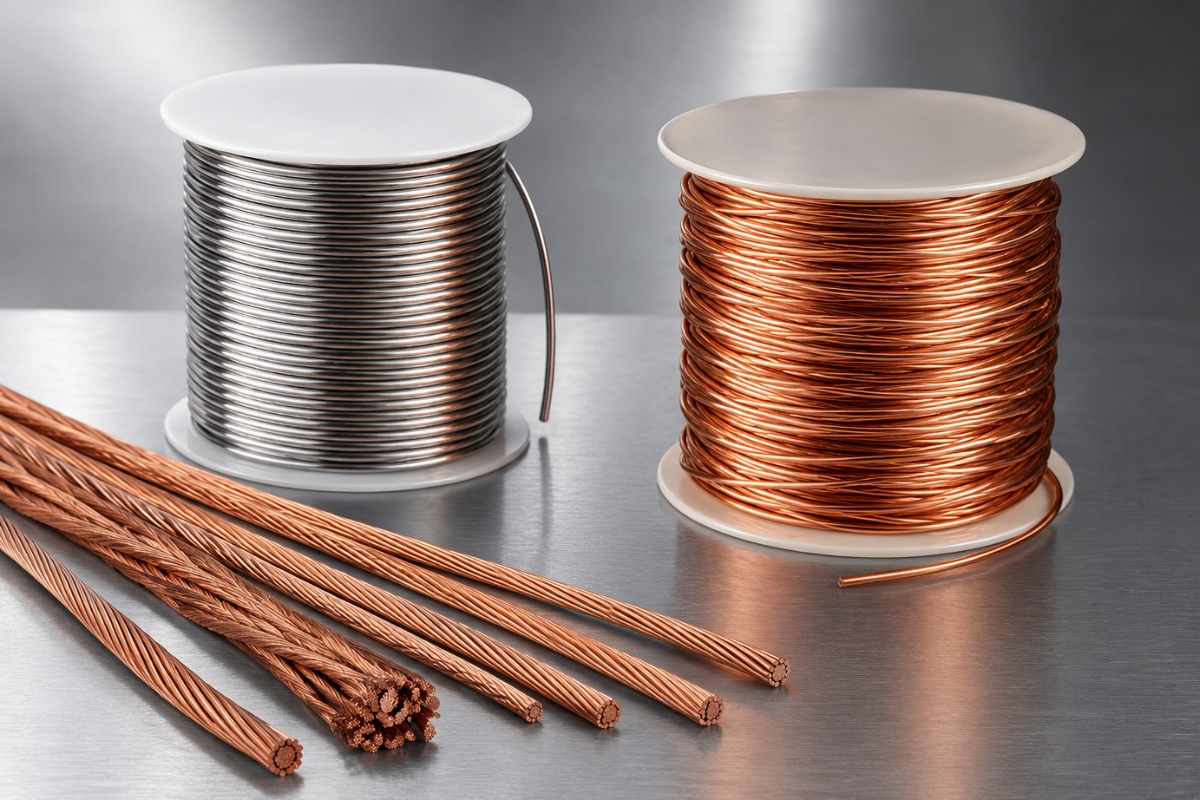
Stranded tin coated copper wire is a conductor made from multiple individual copper filaments that are combined to form a larger flexible conductor, with the copper surface protected by a layer of tin. Instead of relying on one solid metal path, the conductor contains numerous smaller elements that collectively provide the required electrical cross-section. Ganpati Wires describes stranded copper wire as a conductor made from numerous thin copper filaments twisted or bundled together, giving it greater flexibility than solid wire. The tin coating adds another layer of functionality because it helps protect the copper surface from oxidation and corrosion and can support reliable connection performance in demanding environments. This combination makes the wire useful in electrical assemblies where both mechanical flexibility and surface durability matter. For engineers and procurement professionals, the important point is that the term describes both the conductor construction and the surface treatment, so both factors should be considered when selecting the correct product.
Understanding the Stranded Construction
The flexibility of a stranded conductor comes from its multiple individual wires. When a solid conductor bends, most of the mechanical stress is concentrated within one continuous metal element. With stranded construction, the individual filaments can accommodate bending as a group, making the finished conductor easier to route and handle. The exact flexibility depends on factors such as the diameter of the individual strands, number of strands, conductor size, temper and construction. Ganpati Wires offers both conventional stranded copper products and stranded high-flexible copper/tin/silver products, demonstrating that different applications can require different levels of flexibility. This distinction becomes particularly important in equipment that experiences vibration, movement or repeated installation adjustments. A manufacturer should therefore evaluate the application's mechanical requirements before recommending a particular stranded construction rather than treating every stranded wire as equally flexible.
Why Tin Coating Is Added to Copper Wire
Copper is an excellent electrical conductor, but its surface can be affected by oxidation and environmental exposure. Adding a thin tin coating helps protect the copper surface and can provide advantages where the conductor must operate in humid, corrosive or otherwise demanding conditions. Ganpati Wires explains that tin coated copper wire consists of copper wire covered with a thin tin layer and positions the product as a solution for improved protection and long-term performance. The coating does not remove the fundamental electrical advantages of copper; instead, it adds a protective surface around the conductor. For applications involving frequent connections, soldering or exposure to moisture, this additional protection can be particularly useful. The result is a conductor that combines the electrical properties of copper with the surface characteristics associated with tin. That is why tin coated copper wire is widely considered when standard bare copper may not provide the desired environmental protection.
Protection Against Oxidation and Corrosion
Environmental exposure is one of the major considerations in electrical conductor selection. Humidity, moisture and atmospheric conditions can gradually affect exposed copper surfaces, particularly when a conductor is used in challenging operating environments. Tin coating provides a protective surface that can reduce direct exposure of the copper to the surrounding environment. Ganpati Wires specifically positions its tin coated copper wire as a product designed to address oxidation and corrosion concerns. This can make tinned copper particularly useful in applications where reliability over time matters more than simply achieving the lowest initial material cost. Automotive, marine, electrical and industrial systems may all present environmental conditions where surface protection deserves attention. The actual suitability of a particular tin coating still depends on the application, operating temperature, mechanical conditions and relevant technical standards, so the manufacturer's specification should always be reviewed before final selection.
How Stranded Tin Coated Copper Wire Is Manufactured
Producing a dependable stranded tin coated copper wire requires control across several stages rather than simply applying tin to a finished conductor. Copper begins as suitable raw material and is processed into wire through controlled drawing operations. Depending on the required mechanical properties, annealing may be used to obtain the appropriate softness and flexibility. Individual copper wires are then brought together through a stranding process to create the required conductor construction, followed by or combined with a controlled tin-coating process depending on the manufacturing design. Ganpati Wires states that its copper products use EC Grade continuous cast copper rod with a stated purity of 99.90%, while its product portfolio includes stranded and tin-coated constructions. Every stage matters because inconsistency in strand dimensions, coating or conductor construction can affect the finished product. For industrial customers, manufacturing capability should therefore be evaluated as a complete process rather than based only on the appearance of the final wire.
Drawing, Annealing, Stranding and Tin Coating
Wire drawing is used to reduce copper material to the required wire diameter, while annealing can help achieve the mechanical characteristics needed for further processing and final use. During stranding, multiple individual wires are combined to create the desired conductor structure. Tin coating then provides the protective metallic layer over the copper surface. The consistency of these operations can influence electrical resistance, flexibility, surface quality and the conductor's suitability for termination. Ganpati Wires' current portfolio includes bare tin coated copper wire, stranded copper wire and stranded high-flexible copper/tin/silver wire, showing that the company works across multiple copper conductor constructions. For buyers, this manufacturing breadth can be valuable because the same supplier may be able to address both standard and specialized conductor requirements. Technical specifications should always define the required conductor construction, coating, dimensions and application rather than relying on a generic product name.
Key Properties of Stranded Tin Coated Copper Wire
A well-manufactured stranded tin coated copper wire brings together several useful properties. The copper core provides electrical conductivity, while the stranded construction contributes flexibility and easier handling. The tin coating adds surface protection and can be advantageous in environments where oxidation or corrosion is a concern. These properties make the wire relevant to a wide range of electrical and industrial applications. Ganpati Wires lists stranded/braided copper, tin and silver wires, as well as high-flexible stranded copper/tin/silver products, within its portfolio. The final performance, however, depends on the exact construction and should not be generalized across every tinned stranded wire available in the market. Factors such as conductor size, strand diameter, coating thickness, operating temperature and application conditions can all influence performance. That is why experienced industrial buyers typically work from detailed technical specifications rather than purchasing based solely on a catalogue title.
Electrical Conductivity and Performance
The main reason copper remains widely used in electrical conductors is its strong electrical conductivity. With stranded construction, the required conductor cross-section can be distributed across multiple individual wires, allowing the conductor to retain useful electrical characteristics while becoming more flexible. Tin is primarily a surface coating, so the copper remains the main current-carrying material within the conductor. Ganpati Wires states that its products are manufactured using EC Grade copper and highlights 99.90% copper purity on its corporate website. For an industrial buyer, conductivity should be evaluated together with conductor dimensions, resistance, operating temperature and current requirements. A wire with the correct nominal diameter is not automatically suitable if its construction does not match the electrical design. Quality control is therefore essential to ensure that the finished wire consistently meets the agreed electrical specification.
Flexibility and Mechanical Advantages
One of the biggest reasons to choose stranded copper wire is its ability to handle bending more conveniently than a comparable solid conductor. This becomes important when wires must be routed through compact equipment, control panels, electrical assemblies or moving systems. The smaller individual filaments distribute mechanical movement across the conductor rather than forcing one solid piece of copper to absorb every bend. Ganpati Wires describes stranded copper wire as offering flexibility for applications involving movement and vibration, while its product portfolio separately identifies high-flexible stranded copper/tin/silver wire. The level of flexibility required should be discussed with the manufacturer because a conductor intended for occasional installation movement may have very different requirements from one intended for continuous flexing. Selecting the right strand construction can help improve installation convenience and support reliable long-term performance. In this sense, flexibility is not merely a convenience; it can be a design requirement.
Applications of Stranded Tin Coated Copper Wire
Stranded tin coated copper wire can be used in applications where the combination of conductivity, flexibility and surface protection is beneficial. Typical areas include electrical equipment, automotive systems, electronic assemblies, industrial machinery, control systems and specialized cable assemblies. Ganpati Wires' tin coated copper product information highlights applications including marine wiring, automotive harnesses, solar panels, transformers and industrial equipment. Its broader product range also includes stranded and high-flexible copper/tin products for specialized requirements. The precise application determines whether a particular strand configuration and coating specification is appropriate. Engineers should consider environmental exposure, movement, current, temperature and termination requirements before selecting the wire. A technically capable manufacturer can help convert these application requirements into a suitable conductor specification.
Automotive, Electrical and Industrial Applications
Automotive applications can involve vibration, temperature changes, moisture and limited installation space, making flexible conductors useful in many assemblies. Tin-coated copper can provide an additional surface-protection benefit where environmental exposure is a concern. Ganpati Wires specifically identifies automotive harnesses among applications for its tin coated copper products. Industrial equipment can present similar challenges because wires may be exposed to vibration, repeated movement or demanding operating conditions. Electrical panels, machinery and control systems may also require flexible conductors that can be routed around components without excessive mechanical stress. The correct stranded tinned copper wire should therefore be selected according to the equipment's operating environment and electrical design. For OEM manufacturers, consistent conductor dimensions and repeatable quality are especially important because the wire becomes part of a larger production process.
Stranded Tin Coated Copper Wire for Harsh Environments
Some electrical systems operate in conditions where ordinary bare copper may not be the most suitable option. Moisture, humidity, corrosive atmospheres and frequent environmental changes can make surface protection an important consideration. Tin coating can provide a barrier between the copper and its surrounding environment, helping protect the conductor surface. Ganpati Wires describes its tin coated copper wire as providing protection against oxidation and corrosion and highlights demanding applications such as marine and industrial environments. Combining this surface protection with stranded construction creates a conductor that can be both flexible and more resistant to environmental surface degradation. However, product selection should still account for the complete environment, including temperature, chemicals, mechanical movement and installation method. The coating is one part of the solution, not a substitute for proper application engineering.
Bare Copper Wire vs Tin Coated Copper Wire
Bare copper and tin coated copper serve different application requirements. Bare copper is a straightforward conductor with excellent electrical conductivity and is suitable for many standard electrical uses. Tin coated copper adds a protective tin layer that can be advantageous where corrosion resistance, solderability or environmental protection is important. Ganpati Wires lists both bare copper and bare tin coated copper wire among its core product categories. Its tin coated copper page specifically describes the protective advantages of the tin layer. The right choice therefore depends on the intended operating environment and connection requirements. Buyers should avoid assuming that coated wire is automatically superior in every situation; the coating should provide a meaningful benefit that justifies its use. For applications where moisture, corrosion or repeated soldering is a concern, however, tinned copper can be a compelling option.
Stranded vs Solid Copper Wire
Solid copper wire consists of one continuous conductor, while stranded copper wire combines multiple smaller conductors. Solid wire can be appropriate where the conductor remains relatively stationary and a simple construction is preferred. Stranded wire becomes more attractive where installation flexibility, bending or vibration is involved. Ganpati Wires describes stranded copper as multiple thin filaments twisted or bundled together, specifically emphasizing its flexibility compared with solid wire. Adding tin coating creates another distinction by providing surface protection to the copper. The decision should therefore be based on the application rather than on a blanket preference for one conductor type. If a machine requires repeated routing or movement, stranded construction may offer practical advantages. If environmental exposure is also a concern, stranded tin coated copper wire may provide an additional level of protection.
Why Manufacturing Quality Matters
A copper wire can look perfectly acceptable from the outside and still fail to deliver consistent performance if its manufacturing process is poorly controlled. Strand diameter, conductor construction, copper purity, coating uniformity and electrical characteristics all contribute to the quality of the final product. For industrial users, batch-to-batch consistency is particularly important because a wire may be incorporated into thousands of assemblies. Ganpati Wires states that it has been manufacturing copper wire products since 1977 and identifies itself as ISO 9001:2015 certified and RoHS certified. Its website also highlights EC Grade continuous cast copper rod with 99.90% purity. These published credentials can be useful indicators when evaluating a manufacturer, but buyers should still confirm the precise technical requirements and testing documentation relevant to their application.
Choosing a Stranded Tin Coated Copper Wire Manufacturer
Selecting the right Stranded Tin Coated Copper Wire Manufacturer should involve more than comparing quotations. Buyers should evaluate raw-material quality, manufacturing experience, conductor construction, tin-coating capabilities, testing procedures, customization options and supply consistency. A manufacturer with a broader copper product range may also be better positioned to recommend alternatives if the initial wire construction is not ideal for the application. Ganpati Wires' portfolio includes bare copper, tin coated copper, stranded copper, braided copper, high-flexible copper/tin/silver wire and flexible connector products. This range demonstrates experience across different conductor technologies. For OEMs and industrial buyers, the ability to discuss technical requirements directly with a specialized manufacturer can reduce sourcing complexity. The best supplier is ultimately one that can deliver the required specification consistently while supporting the customer's technical and commercial requirements.
Important Factors for Industrial Buyers
Before placing an order, buyers should confirm the conductor material, individual strand dimensions, total conductor size, stranding construction, tin coating requirements, flexibility, electrical characteristics and packaging. It is also sensible to clarify whether the wire is intended for static installation, occasional movement or continuous flexing. Environmental conditions should be discussed if the wire will face moisture, humidity, chemicals, vibration or elevated temperatures. Ganpati Wires' published product range demonstrates that it can supply different copper, tin and high-flexible constructions, allowing customers to evaluate multiple options. Sample approval can be especially useful for OEM applications because it allows the customer to test the conductor within the actual assembly before moving to bulk procurement. Clear specifications protect both sides and reduce the possibility of receiving a product that technically matches the product name but does not match the application's actual needs.
Custom Wire Manufacturing Solutions
Different industries have different conductor requirements, and standard catalogue sizes may not always be sufficient. A manufacturer may need to supply a particular strand construction, conductor size, coating requirement or packaging format for a customer's production line. Ganpati Wires states that customized copper wire products are one of its capabilities and emphasizes its ability to manufacture products according to customer specifications. Customization should begin with technical information about the intended application rather than a simple request for a particular wire diameter. Current, flexibility, operating environment, termination method and installation conditions can all affect the appropriate conductor design. Once these details are understood, the manufacturer can work toward a specification that is practical for production. For businesses with recurring requirements, a documented custom specification can also improve repeat-order consistency.
Why Choose Ganpati Wire
Ganpati Wire has built its product portfolio around copper and related conductor solutions, with its current corporate website stating that the business was established in 1977. It highlights 47+ years of experience, 99.90% copper purity and ISO 9001:2015 and RoHS credentials. The company's range includes bare tin coated copper wire, stranded/braided copper and tin wire, stranded high-flexible copper/tin/silver wire, braided flexible tin coated copper wire and flexible connectors. This broad portfolio is valuable for industrial customers because conductor requirements can change depending on the equipment design and application. Instead of treating copper wire as a single commodity, Ganpati Wire's range covers several construction and surface-treatment options. For buyers looking for a Stranded Tin Coated Copper Wire Manufacturer in India, this combination of manufacturing experience, product variety and copper-focused expertise provides a strong starting point for technical evaluation.
Bulk Supply and Industrial Procurement
Bulk procurement requires reliable quality, predictable specifications and dependable supply. When stranded tin coated copper wire becomes part of an OEM production line, even a small change in conductor construction can affect assembly processes, termination and product performance. This is why industrial buyers should approve the specification before moving to large-volume purchasing. Ganpati Wires' long-standing manufacturing history and broad copper product portfolio support its positioning as an industrial copper-wire supplier. Buyers can also benefit from discussing future requirements in advance, especially when they expect recurring orders or customized conductor designs. Packaging, coil or reel configuration, quantity, inspection requirements and delivery schedules should be clearly defined. A strong manufacturer relationship is not simply about obtaining the lowest price; it is about creating a dependable supply chain that supports the buyer's own production commitments.
Conclusion
Stranded Tin Coated Copper Wire combines the electrical advantages of copper, the flexibility of a multi-strand construction and the additional surface protection provided by tin. This combination makes it suitable for applications where electrical reliability, mechanical flexibility and resistance to environmental surface degradation are important. From automotive harnesses and electrical equipment to industrial machinery, transformers and demanding electrical assemblies, the right conductor construction can make a meaningful difference to product performance.
For businesses searching for a dependable Stranded Tin Coated Copper Wire Manufacturer in India, Ganpati Wire offers a broad copper-wire portfolio backed by a manufacturing history dating to 1977. Its published information highlights EC Grade copper with 99.90% purity, ISO 9001:2015 and RoHS credentials, along with products covering stranded, braided, tinned and high-flexible copper constructions. The company's tin coated copper information also emphasizes protection against oxidation and corrosion and identifies demanding applications such as automotive, marine, solar, transformer and industrial equipment.
The right wire should always be selected according to the actual application, not simply by product name. When conductor size, strand construction, coating, flexibility and operating environment are properly matched, stranded tin coated copper wire can become a dependable component within demanding electrical systems. Ganpati Wire's specialized product range makes it a suitable manufacturer to approach when businesses require standard or customized stranded copper and tin-coated conductor solutions.
Frequently Asked Questions
Stranded tin coated copper wire consists of multiple copper strands that are combined into one flexible conductor and protected with a tin coating. The copper provides conductivity, while the stranded construction improves flexibility and the tin coating provides additional surface protection.
Tin coating helps protect the copper surface against oxidation and corrosion and can provide useful solderability characteristics. It is particularly relevant for applications exposed to moisture, humidity or demanding environmental conditions.
Yes, stranded construction generally provides greater flexibility than a comparable solid conductor. The actual flexibility depends on strand diameter, number of strands, conductor construction and manufacturing specifications.
It can be used in automotive harnesses, electrical equipment, industrial machinery, transformers, marine-related applications, solar systems and other electrical assemblies where flexibility and surface protection are required. Ganpati Wires specifically lists automotive, marine, solar, transformer and industrial applications for its tin coated copper products.
Ganpati Wire has been involved in copper-wire manufacturing since 1977 and currently highlights 47+ years of experience, 99.90% copper purity, ISO 9001:2015 certification and RoHS certification. Its product portfolio includes stranded copper/tin wires, high-flexible stranded constructions, braided tin-coated copper and other specialized copper products.